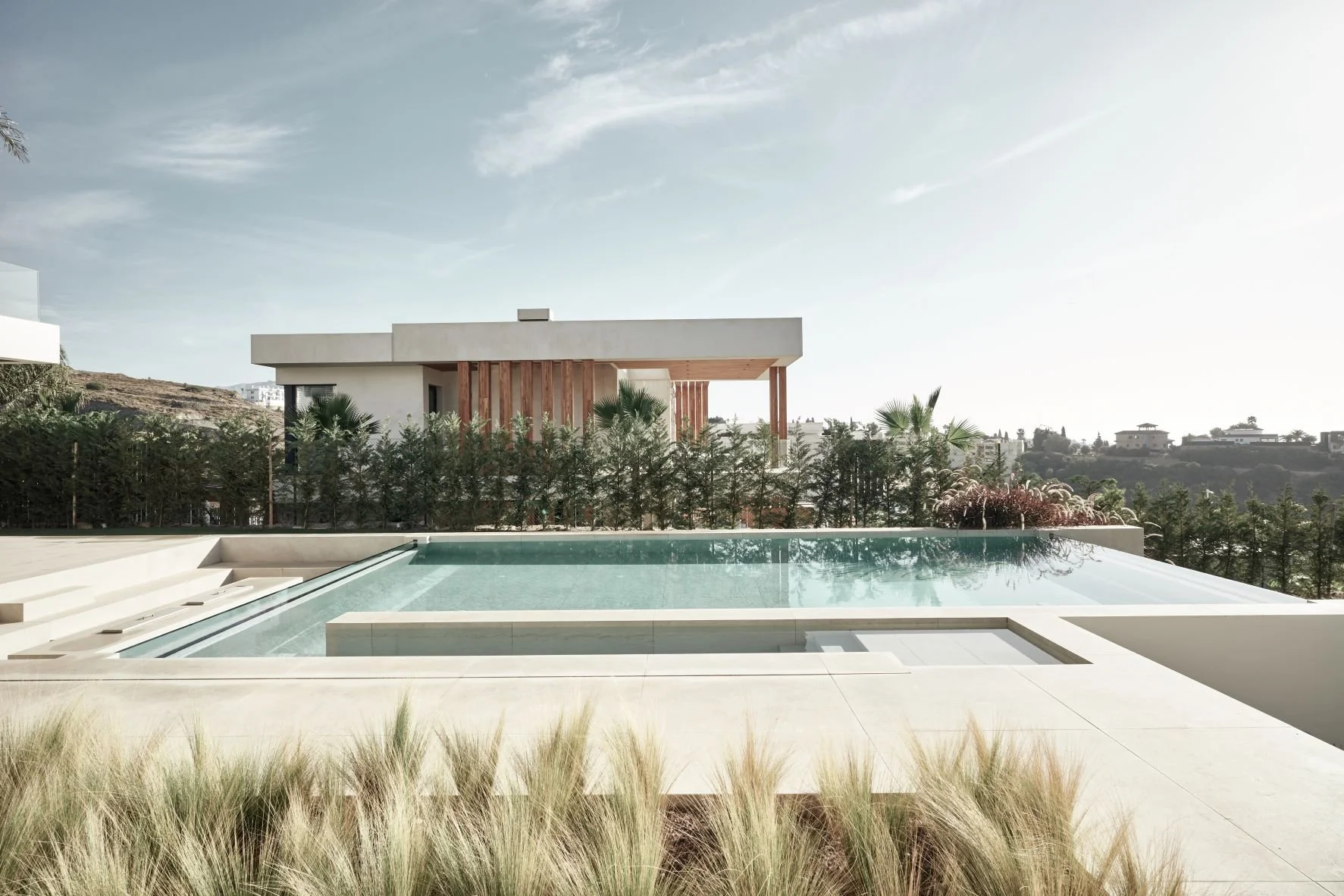
Discover how brutalism and minimalism differ in their approach to materials, architectural volumes and the experience of contemporary spaces.
At first glance, brutalism and minimalism may appear to be similar architectural styles. Both can feature clean geometries, uncluttered spaces and restrained decoration. However, the feelings they evoke and the way they use materials are very different.
Here are three key differences that help distinguish them.
1. Brutalism Reveals Materials; Minimalism Reduces Visual Noise
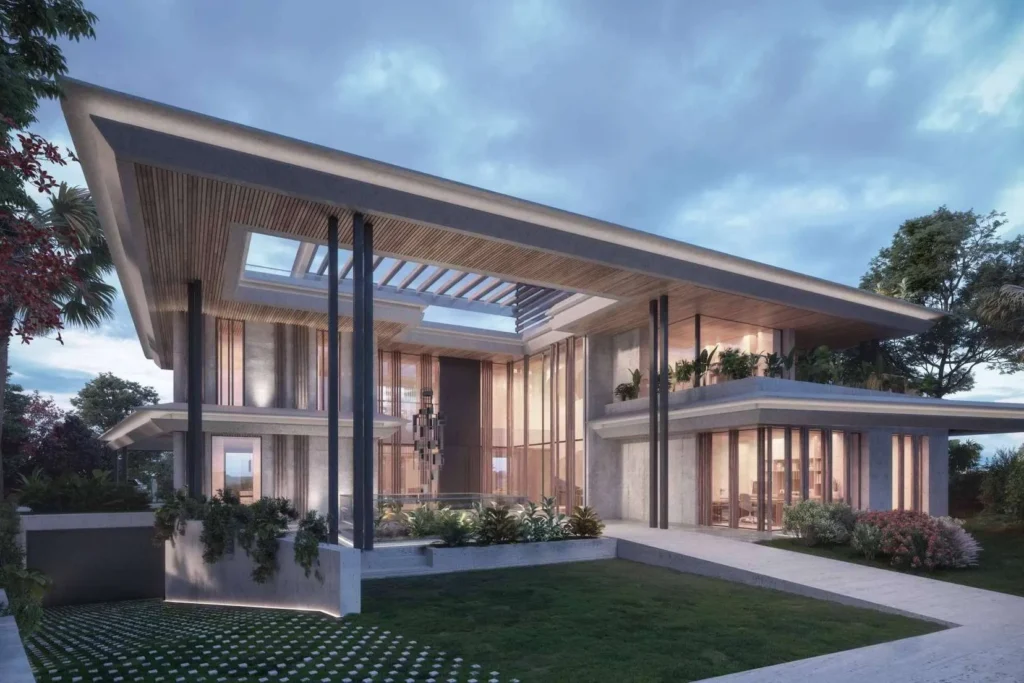
In brutalism, materials have a strong presence.
Concrete may be left exposed, stone reveals its natural texture and structural elements do not always need to be concealed. Architecture conveys a sense of strength precisely because it allows materials to speak for themselves.
Minimalism, by contrast, seeks to eliminate anything visually unnecessary. Continuous surfaces, clean junctions and few elements competing for our attention.
Simply put, minimalism seeks to ensure that nothing is superfluous, while brutalism seeks to ensure that nothing pretends to be something it is not.
2. One Seeks Visual Lightness; the Other Embraces Boldness
Many minimalist projects feature refined lines, simple volumes and spaces that convey a sense of calm and lightness.
Brutalism tends to take a different approach.
Thick walls, large surfaces, cantilevers and bold architectural volumes can become defining elements of a project.
However, this does not necessarily mean creating architecture that feels heavy or cold.
In fact, an interpretation such as Mediterranean brutalism can balance this boldness through natural light, vegetation, wood, stone and a more open relationship between indoor and outdoor spaces.
3. Minimalism Tends to Disappear; Brutalism Seeks a Presence
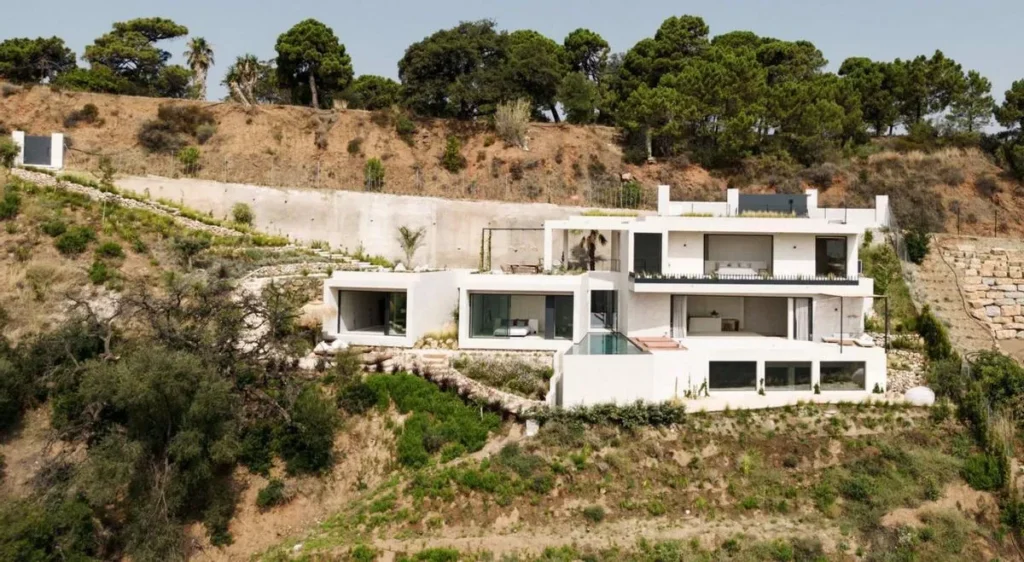
Well-designed minimalist architecture often aims to make a building feel almost like a backdrop to the life unfolding within it.
Brutalism more readily embraces the idea that architecture itself can have a distinctive personality.
A wall can become a sculptural element. A single volume can define the entire appearance of a home. Even a texture can change with the light and become part of the spatial experience.
At studios such as Archidom, this architectural strength is combined with a Mediterranean perspective. Landscape, topography, light and natural materials allow bold architectural volumes to engage with their surroundings rather than dominate them.
Frequently Asked Questions About Brutalism and Minimalism
What Is the Main Difference Between Brutalism and Minimalism?
Brutalism focuses on the expressive strength of materials, structures and architectural volumes. Minimalism seeks to reduce elements and create a sense of simplicity, order and visual lightness.
Does Brutalism Always Use Exposed Concrete?
No. Although concrete is one of its most recognisable materials, brutalism can also incorporate stone, wood, steel, glass and other materials, expressing their natural qualities without unnecessarily concealing them.
Can a Brutalist Home Feel Warm and Welcoming?
Yes. Warmth depends not only on the shape of a building but also on its lighting, vegetation, textures and materials. Mediterranean brutalism is an excellent example of how bold volumes can be combined with a more welcoming and comfortable atmosphere.
Can Minimalism and Brutalism Be Combined?
Yes. In fact, they share certain principles, such as formal simplicity and the absence of unnecessary decoration. The difference is that brutalism tends to give greater prominence to materials and architectural presence.
Which Style Is Better Suited to a Contemporary Home?
It depends on the terrain, surroundings, lifestyle and the character intended for the project. Rather than choosing a label, the ideal approach is to adapt the architecture to its location and the actual needs of the people who will live there.
So, Brutalism or Minimalism?
There is no single answer that works for every project.
Minimalism can be ideal when the aim is to achieve serenity, visual clarity and a reduction of unnecessary elements.
Brutalism is particularly interesting when materials, structures and architectural volumes are intended to form part of a space’s identity.
Moreover, there does not have to be a rigid boundary between the two.
The most interesting architecture often emerges when we stop thinking solely in terms of labels and begin asking what each location truly needs.
At Archidom, every project begins with this relationship between context, materials and ways of living, to develop architecture with an identity of its own.