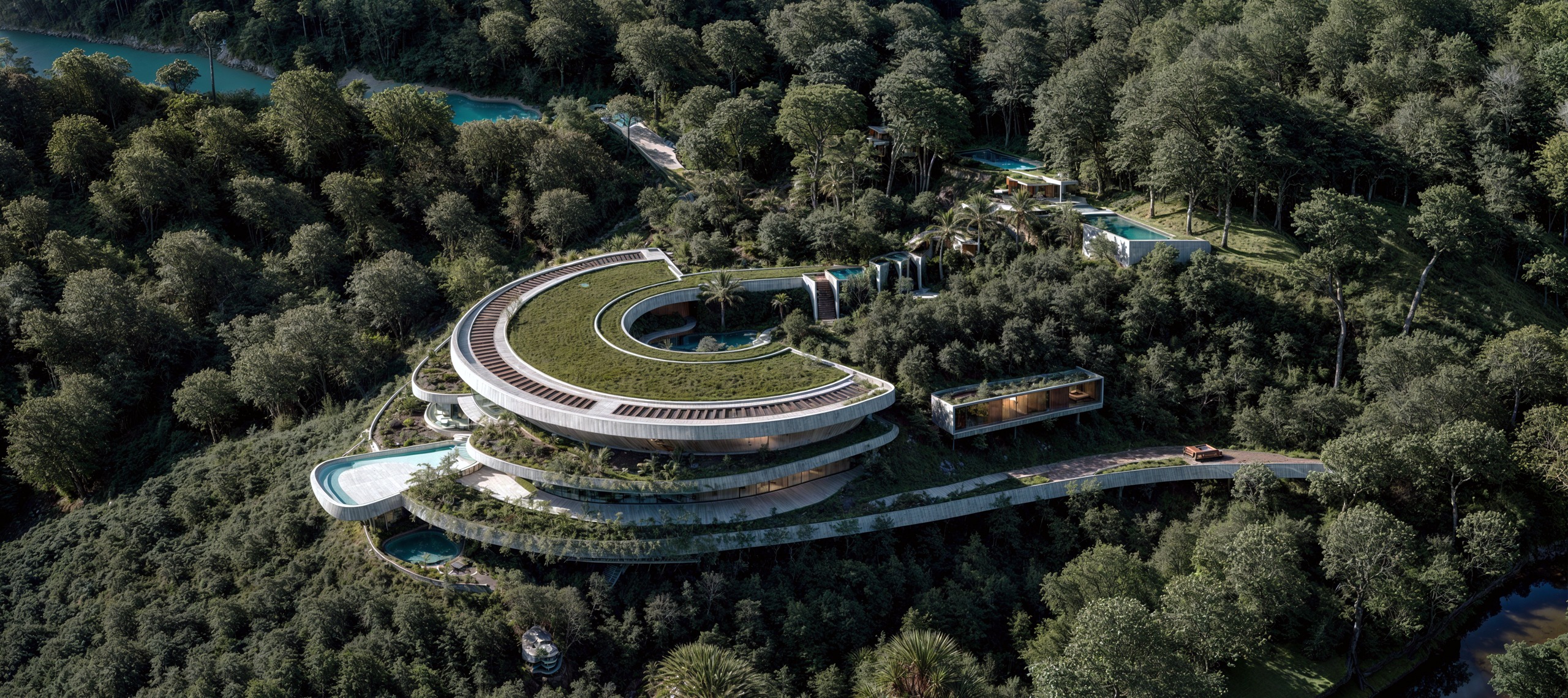
What defines luxury architecture in Marbella in 2026? An architect’s view on the trends shaping villas, wellness spaces and hospitality — from a studio that builds them.
Every January, dozens of articles list the trends supposedly defining luxury property in Marbella. Most of them are written by real estate agencies. Very few are written by the people who actually design and build these homes.
At Archidom Studio we have been designing residential, hospitality and commercial projects on the Costa del Sol since 2017, from private villas in La Zagaleta to beach clubs and wellness spaces along the coast. This article is our reading of where luxury architecture in Marbella is genuinely heading in 2026: not what sounds good in a brochure, but what our clients are asking for, what the market data supports, and what we are drawing on our own boards right now.
The context: a market that rewards architecture
Marbella enters 2026 as one of the strongest luxury residential markets in the world. Prime prices rose by 8.1% in 2025 — well above the 3.2% global average for prime residential — and average asking prices closed the year at €5,524 per square metre, up 9.4% year on year. In La Zagaleta, transactions above €14,000 per square metre are now documented.
Behind those numbers sits a structural reality: demand keeps growing while genuinely prime land — the Golden Mile, Sierra Blanca, Cascada de Camoján, La Zagaleta — is nearly exhausted. When land is scarce and expensive, architecture becomes the main variable a buyer or developer can still control. In this market, design is not decoration. It is the difference between an asset and just another expensive house.
That context explains every trend that follows.
The end of the white box: warm, organic modernism
For a decade, “luxury villa in Marbella” meant a white rendered volume with glass and sharp edges. That formula is fading. What clients ask for in 2026 is still contemporary, clean lines, generous glazing, honest volumes, but warmer: natural stone with visible texture, timber that ages, lime renders, soft curves, landscape that touches the building instead of framing it.
We see this shift in our own studio daily. In our residential work — Villa Zagaleta, Villa Montemayor, Villa Puente — the conversation with clients has moved from “how minimal can it be” to “how will it feel at seven in the evening”. Materials are chosen for how light lands on them, not just how they photograph. This is the essence of Mediterranean contemporary architecture: the building belongs to the place because it is built, quite literally, from the place – its stone, its light, its vegetation.
What only practice teaches you: texture has a technical cost. Natural stone cladding and open-joint timber demand more precise detailing, better waterproofing strategy and closer site supervision than a flat white render. The trend is easy to sketch and hard to execute — which is exactly why well-executed examples command a premium.
Architecture that starts with the terrain, not the floor plan
The most consistent request we receive from sophisticated clients in 2026 is not a style. It is a relationship: “I want the house to belong to the plot.”
In practical terms, this means the design process inverts. Instead of drawing a floor plan and placing it on the land, the land dictates the plan: the sun’s path across the day, the direction of the prevailing breeze, the exact angle of the best sea view, the trees worth keeping, the slope of the terrain. At Archidom Studio this is our starting point in every project — before we draw a single line, we study the site. In Villa Montemayor, the topography and the views guided the entire distribution; the house adapts to the terrain, not the other way around.
Buyers have become fluent in this language. They ask about orientation before they ask about square metres, because they have learned that a poorly oriented 1,000 m² villa lives worse than a well-oriented 600 m² one.
Indoor-outdoor continuity as the true measure of luxury
Marbella enjoys over 320 days of sunshine a year, and in 2026 the market has fully internalised what that means: the terrace is not an accessory to the house — it is half the house.
The current standard in high-end projects includes covered outdoor living rooms with the same finishes as the interior, kitchens that extend to exterior dining areas, flush thresholds with no step between inside and out, and glazing that disappears completely rather than merely sliding. The technical agenda behind this is substantial: structural spans that allow ten-metre openings, hidden drainage on flush terraces, exterior materials that can run indoors without visual rupture.
This is also where residential design borrows from hospitality. Our experience designing beach clubs and leisure spaces, Playa Padre, Momento Club Marbella, La Reserva Beach, taught us how people actually behave in outdoor Mediterranean spaces: where they gravitate at sunset, how shade patterns dictate occupancy, how sound travels across water. We now apply those lessons to private homes, because the modern Marbella client wants their terrace to feel like the best table of a beach club — private.
Wellness moves from amenity to architecture
The gym in the basement is over. In 2026, wellness is a design driver, not a room list item. Clients ask for spa circuits with natural light, treatment rooms with garden views, indoor pools that open to the exterior, dedicated breathing between spaces, architecture designed around the ritual, not squeezed under it.
We saw this evolution coming through our work on Centro Wellness Dunique, where the entire architectural logic — circulation, atmosphere, materials, light — was built around how a visitor should feel at each point of the journey. The residential market has now adopted the same thinking: the question is no longer “does it have a spa?” but “how does the house make me feel at 8 a.m.?”
Health-oriented features, air quality, water treatment, acoustic comfort, circadian lighting have become part of the standard specification conversation in the premium segment.
Quiet sustainability: local materials, passive design, real efficiency
Sustainability in Marbella’s luxury market has matured past the solar-panel press release. What defines 2026 is quieter and more architectural: passive orientation that reduces cooling loads before any technology is installed, local stone and ceramics that cut transport footprint while rooting the building in its landscape, cross-ventilation designed into the plan, deep porches calculated for summer sun angles and winter gain.
This has always been central to how we work at Archidom Studio — using local materials, light and landscape as the starting point of design is not a trend for us; it is the method. What has changed is the client: energy performance now appears in purchase decisions and in valuations, and international buyers increasingly expect certification-level efficiency as a baseline.
Branded living and the personalisation counter-trend
Two forces are pulling the top of the market in opposite directions — and both are growing. On one side, branded developments such as EPIC Marbella by Fendi Casa or Marbella Design Hills with Dolce&Gabbana confirm the appetite for signature living with hotel-grade services. On the other, private clients increasingly reject anything catalogue-based: bespoke furniture, made-to-measure carpentry, one-off pieces, a house that could belong to no one else.
The common denominator is identity. Whether it comes from a fashion house or from the owner’s own biography, the 2026 buyer wants a space that means something. For us, this is the most interesting brief there is: translating a client’s way of living into distribution, material and light. A well-designed home is a portrait.
The integrated studio model: design, technique and construction under one direction
The least photogenic trend is arguably the most decisive. Construction capacity on the Costa del Sol is stretched, quality builders have long waiting lists, and cost control has become as important to clients as design itself. The market’s answer is integration: single teams that carry a project from concept through technical development, cost control and site supervision to delivery.
This is the model Archidom Studio was founded on in 2017. Architecture, interior design, engineering, cost management and construction coordination inside one process — small, coordinated teams where the person who drew the idea is the same one defending it on site. In 2026, what was once our differential is becoming the market’s expectation, for a simple reason: it is the only reliable way to guarantee that the finished building keeps the essence of the original concept, on budget and on time.
What this means if you are building in Marbella in 2026
Three practical conclusions from everything above. First, invest in the site study before the design: orientation, light and terrain will add more value than any finish. Second, judge a studio by its built work and its process, not its renders; execution is where trends succeed or fail. Third, think in experiences rather than rooms: the questions that will define your project’s value are how it lives at sunset, how summer and winter change it, and how it will age.
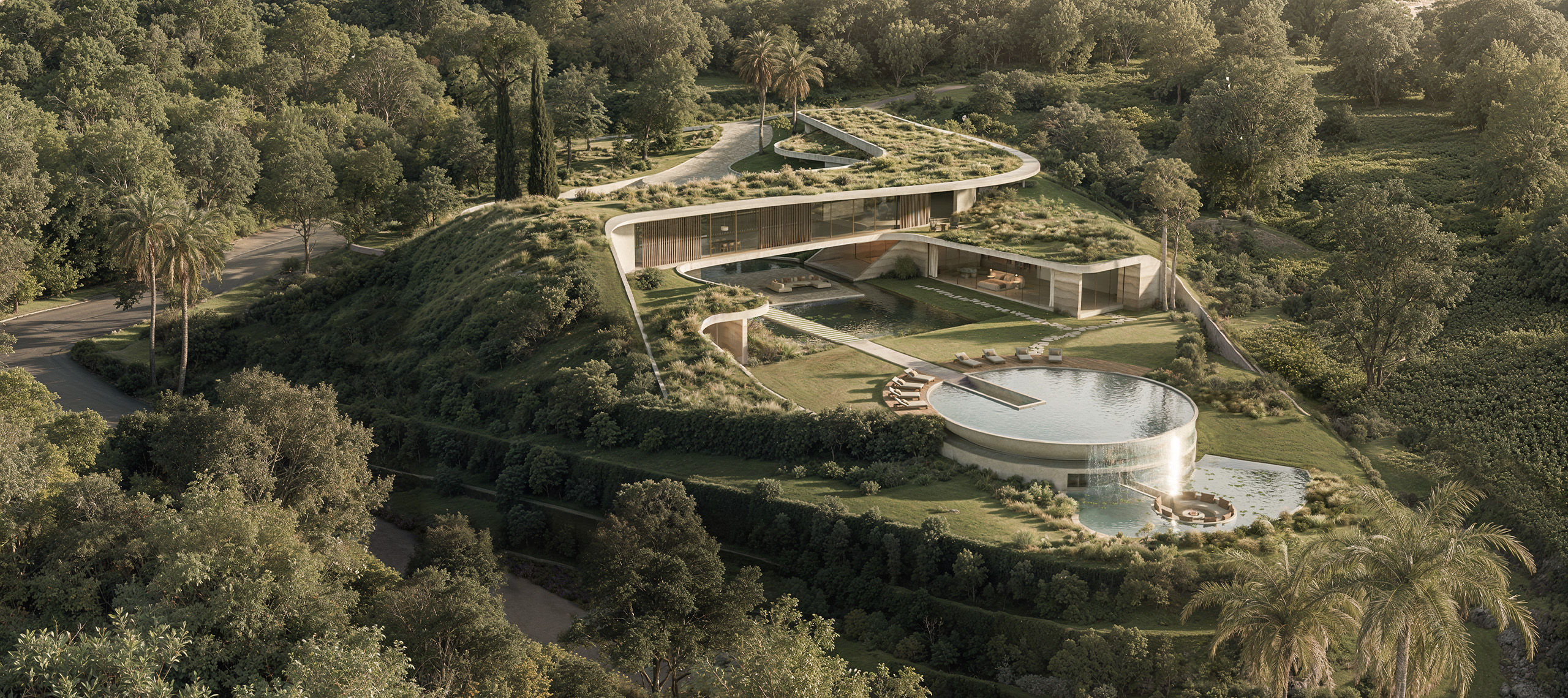
Luxury architecture in Marbella in 2026 is not about more — more metres, more marble, more gadgets. It is about coherence: a building that belongs to its landscape, serves the life of its owner and is executed with the technical rigour that protects the idea from concept to delivery.
That is the architecture we practise.
Have a project in mind? Whether it is a villa, a development or a hospitality space, we would be glad to talk about it.
Archidom Studio — Marbella Office Calle Doctor Esteban San Mateo, 10 · 29670 Marbella +34 604 83 64 15 · info@archidomstudio.com archidomstudio.com